Guides
Equine Central Editorial

Horse riding is one of the more rewarding activities you can start in the UAE, for you AND your child (here's looking at you, moms who used to ride). But with clubs and centers across the Emirates offering everything from casual pony rides to structured competition pathways, choosing where to start can feel overwhelming. Here is what actually matters when picking the right riding lessons.
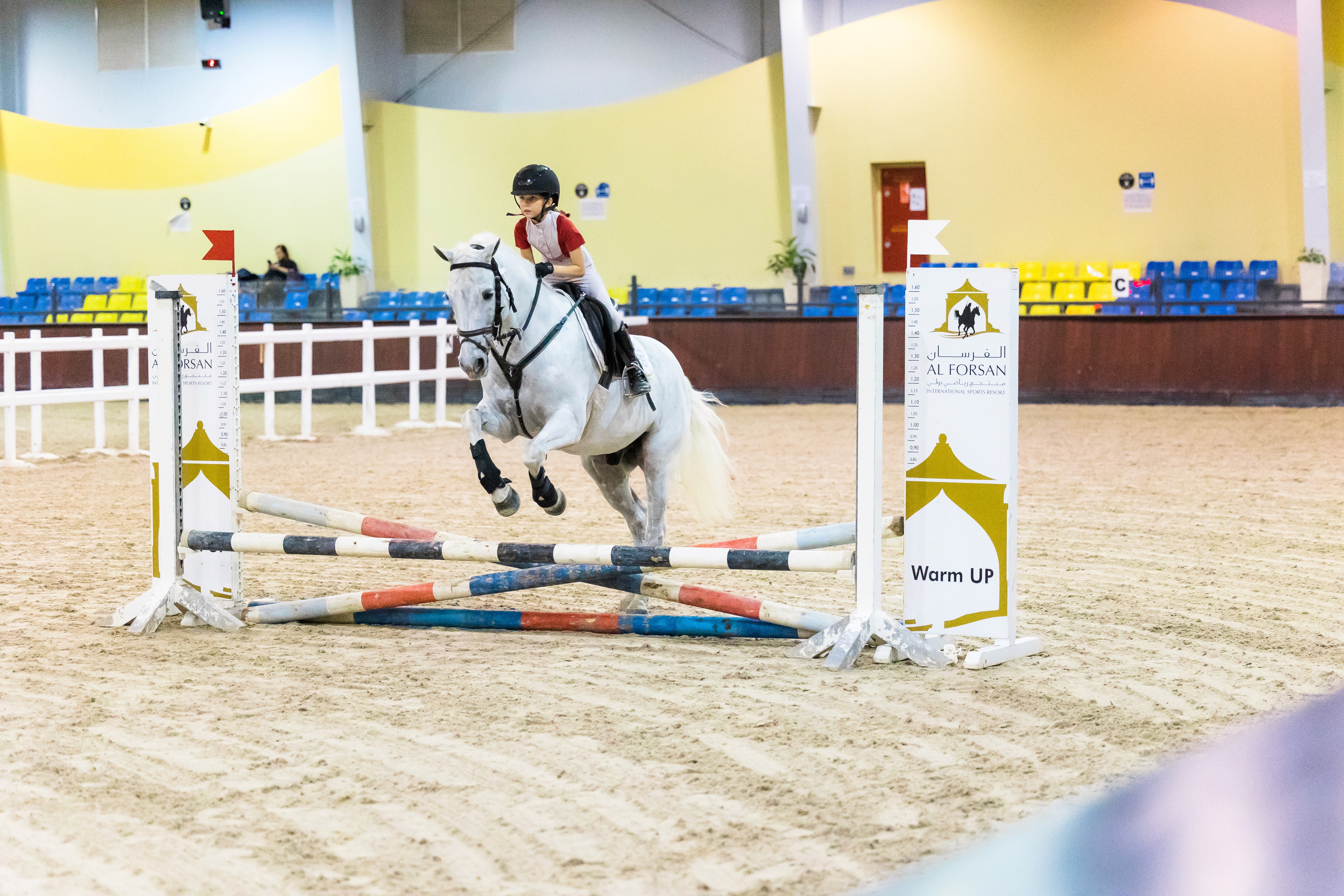
Start With the Basics: Age and Readiness
Most riding schools in the UAE accept children from around age 5 or 6, though this varies by facility and by the child's confidence around animals. Younger children often begin with lead line lessons, where a groom walks alongside the pony, before progressing to more independent riding. For adults, there is no upper age limit to starting, and many yards see complete beginners well into their 40s and 50s taking their first lessons.
The better question is not just how old is old enough, but how comfortable is this person around horses. A short trial lesson or an introductory session at the yard is a good way to gauge this before committing to a term of lessons.
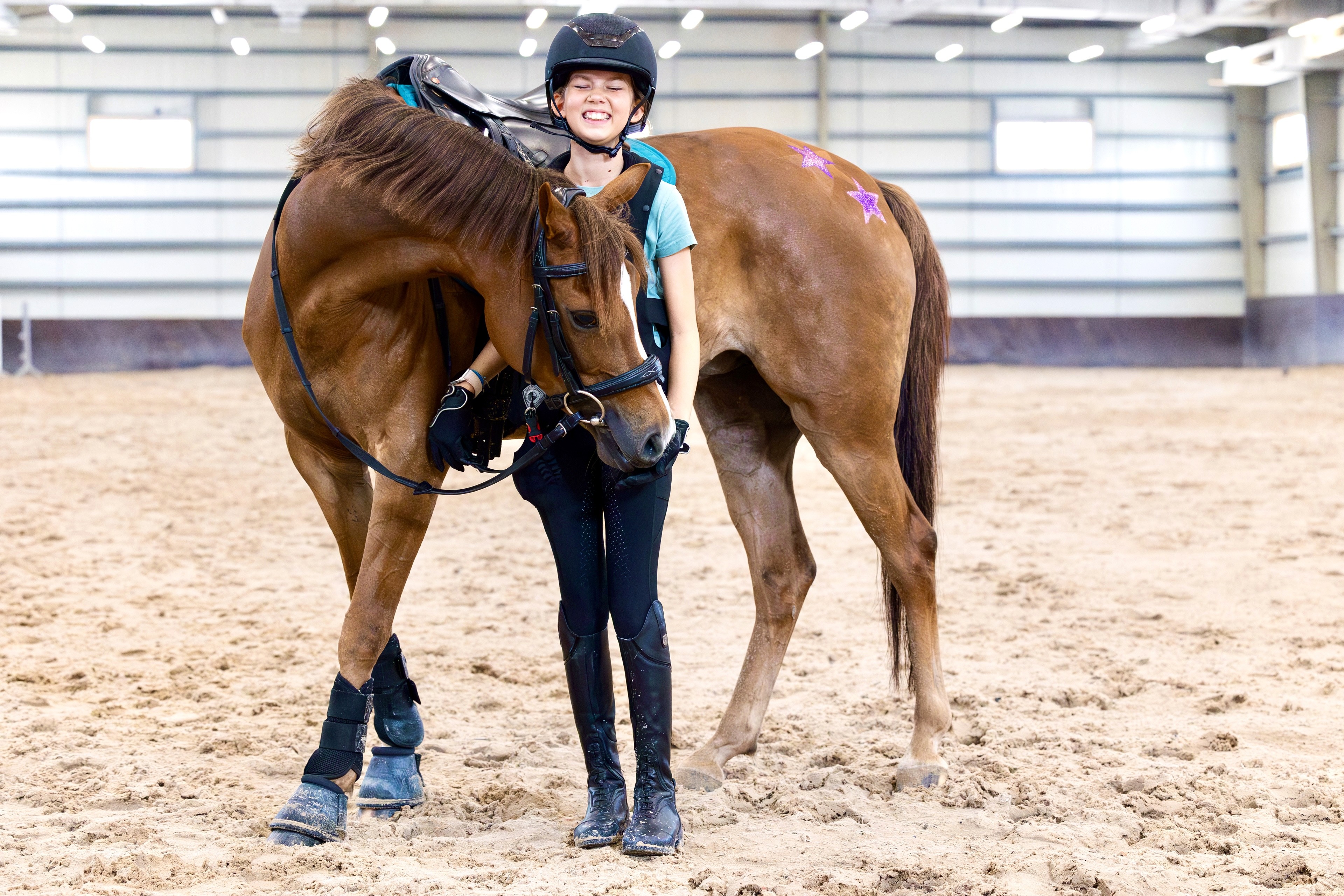
What to Look for in a Riding School
Not all riding centers are set up the same way, and a few practical checks go a long way:
Qualified, patient instructors. Look for instructors with recognized coaching qualifications, such as those accredited through the British Horse Society or similar bodies. Just as important is teaching style, a good instructor for beginners is patient, communicates clearly, and adjusts pace to the rider rather than pushing too fast.
Well cared for lesson horses. Lesson ponies and horses do a lot of work, and the good ones are calm, sound, and clearly well looked after. Ask to see the horses before committing, and pay attention to their condition and temperament.
Appropriate group sizes. Smaller lesson groups mean more individual attention, which matters most in the early stages. A class of two or three beginners will progress differently than a class of eight.
Safety standards. Helmets should be mandatory and properly fitted, arenas should be enclosed and well maintained, and there should be a clear procedure in case of a fall or emergency.
Shaded or covered arenas. Given the climate here, a covered or indoor arena makes a real difference to consistency, since outdoor lessons often need to be rescheduled around the heat for much of the year.
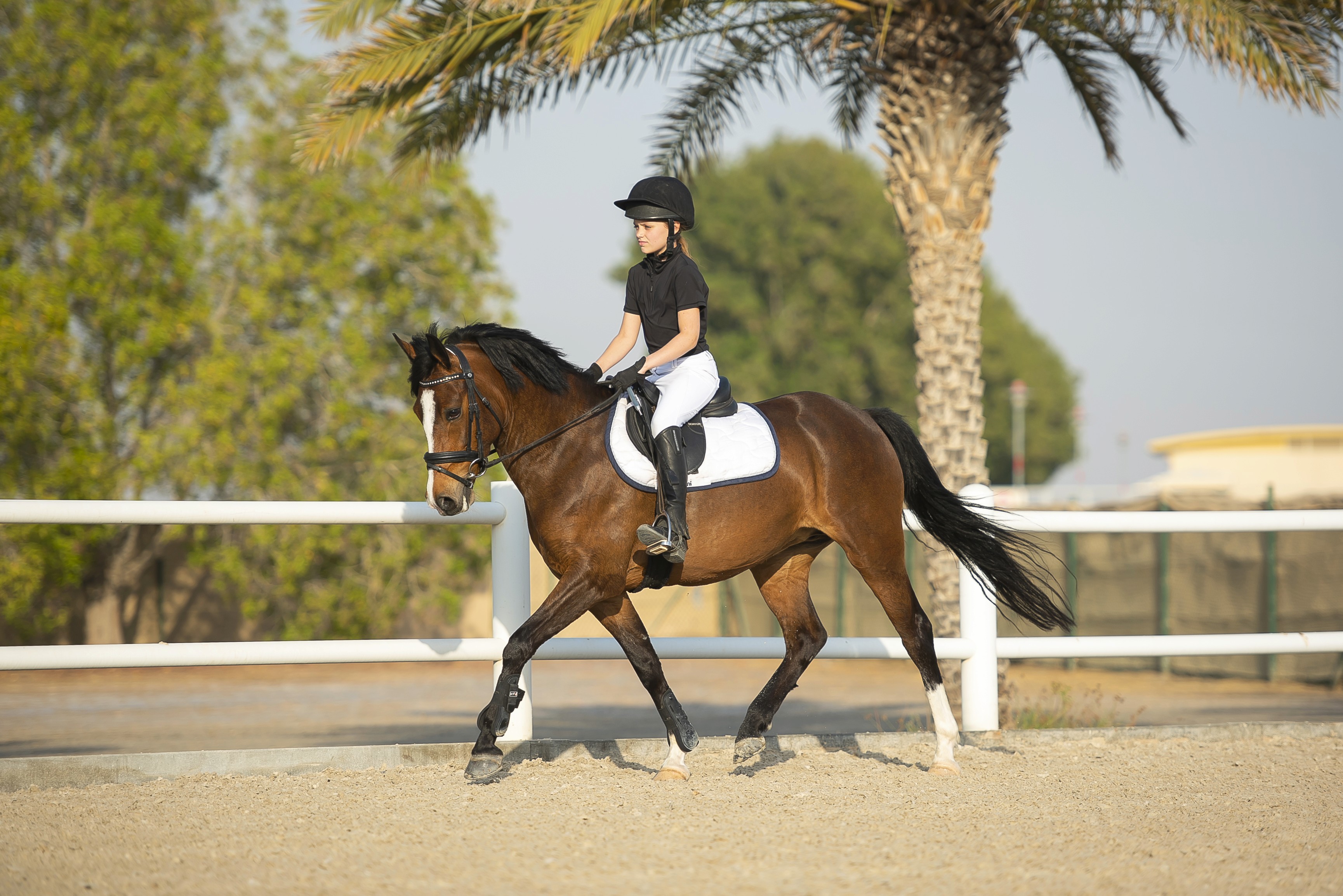
Group Lessons or Private Lessons
Group lessons are often the more social and affordable option, and they work well for children who enjoy learning alongside friends. Private lessons offer faster progress and lessons tailored closely to one rider's pace, which can suit nervous beginners or those working toward a specific goal.
Many riding schools recommend starting with a mix, a handful of private lessons to build core skills and confidence, followed by a move into group lessons once the basics of steering, stopping, and balance are comfortable.
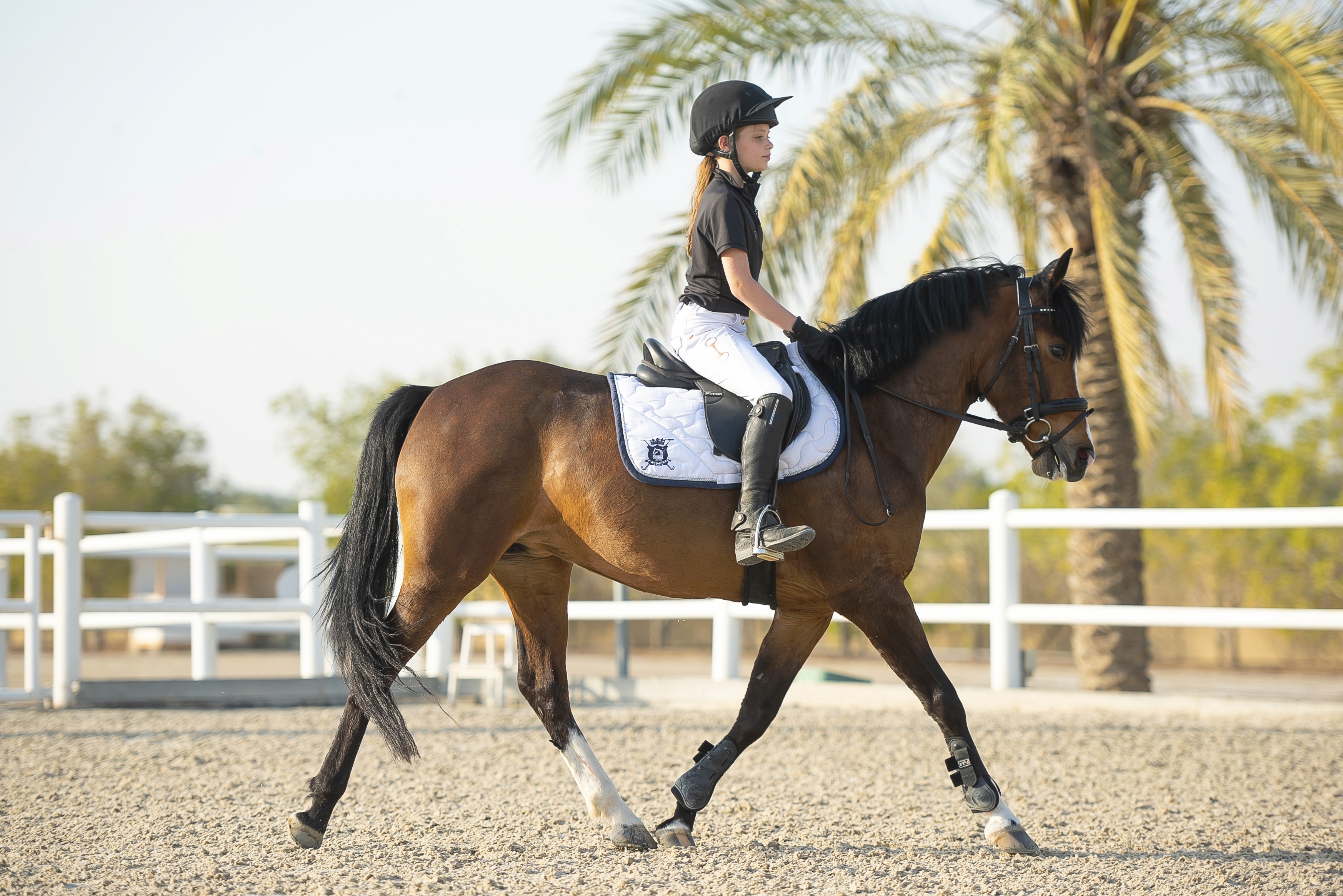
What the First Few Months Typically Look Like
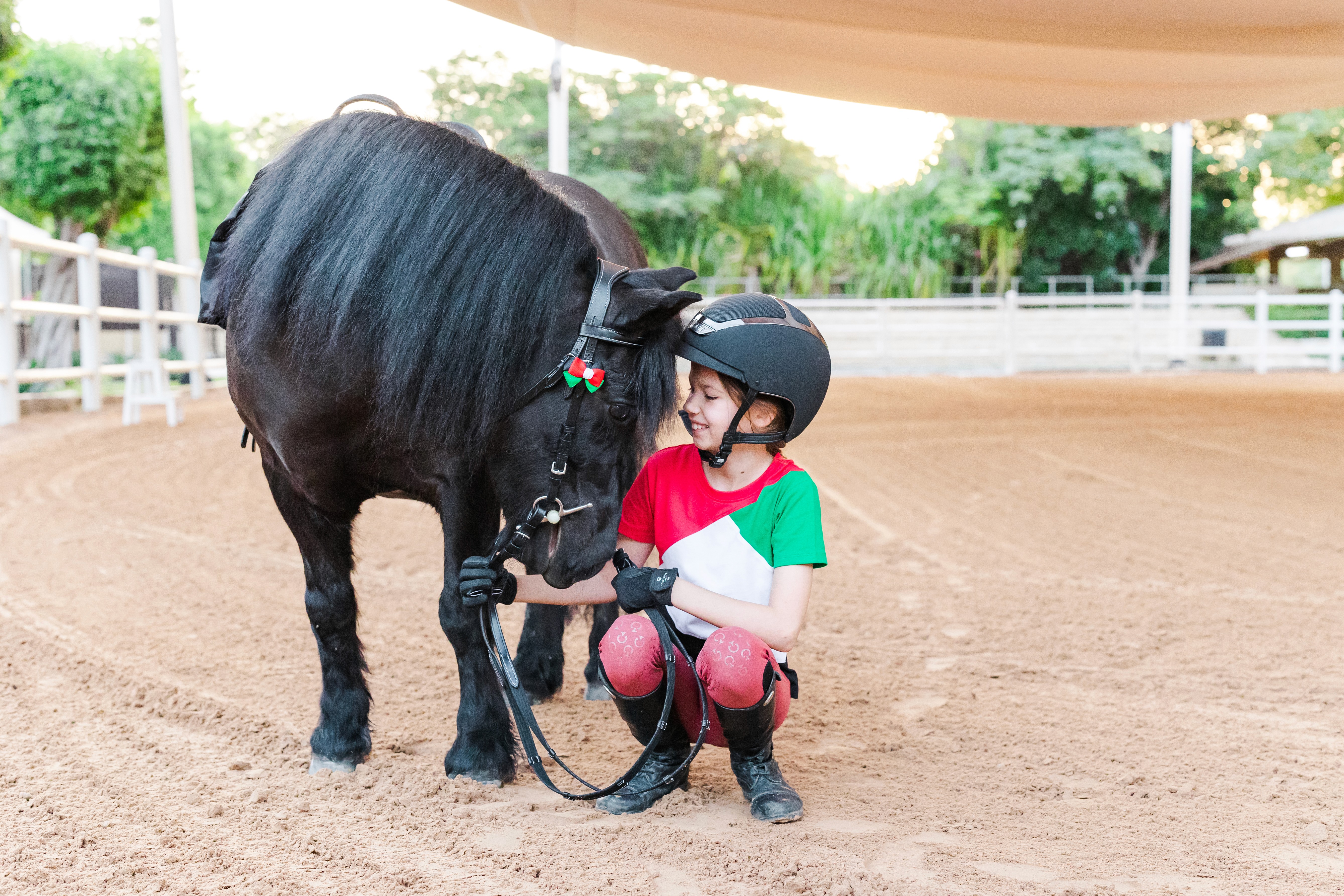
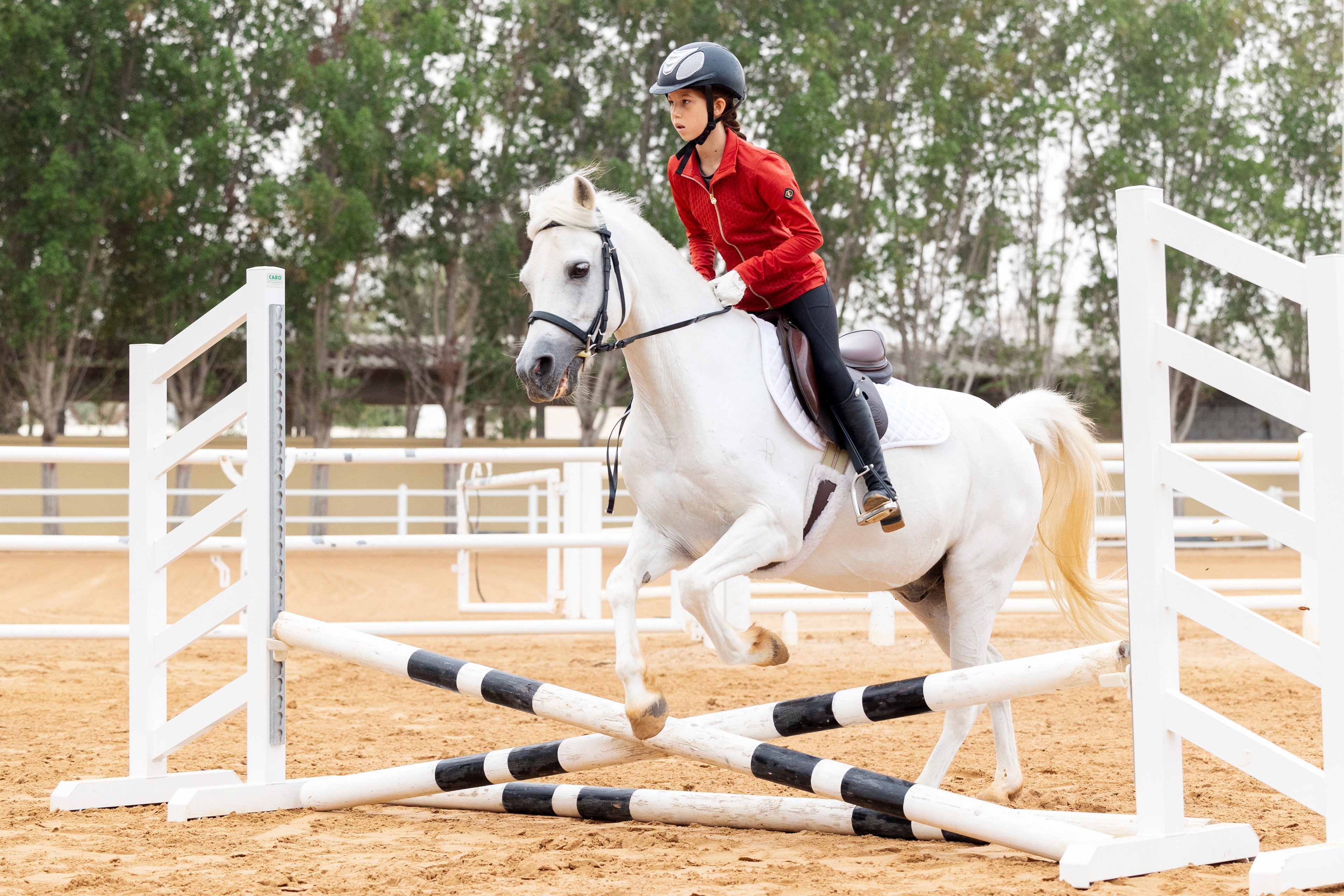
New riders usually start on the lead line or in a controlled arena setting, focusing on balance, posture, and basic control at a walk. Trot work is introduced once the rider is secure in the saddle, followed gradually by canter as confidence builds. Most schools also teach basic horse care alongside riding itself, grooming, leading, and understanding horse behavior, which helps build a well rounded relationship with the animal rather than just the mechanics of riding.
Progress varies a lot from person to person. Some riders are cantering confidently within a few months, others take longer, and that is completely normal. A good school will not rush this process.
Questions Worth Asking Before You Sign Up
What qualifications do the instructors hold, and how much experience do they have teaching beginners or children specifically
Can we meet the instructor and see a lesson in progress before committing
What is the class size for beginner lessons
Is there a trial lesson available before signing up for a term
What happens during the hottest months, are lessons adjusted or moved indoors
What safety equipment is provided, and what should we bring ourselves
Is there a clear path to more advanced lessons or, eventually, competition if that becomes a goal
What to Avoid Like the Plague
Here's the thing, we all have our distinct personalities, so finding the right instructor may take some work. Here are a few things to ask yourself when evaluating instructors.
Do you feel safe when riding with them?
Do they give you confidence, or make you feel bad if you make a mistake?
Do you feel like they are setting you up for a future without them? Many instructors will make you believe that you NEED them forever. A good instructor will be thrilled to see you thriving on your own.
Do they encourage you to ride/try other instructors or do they talk bad about other trainers? Hint, they shouldn't be toxic.
Setting Realistic Expectations
Riding is a sport that rewards patience, both from the rider and from the parent watching a child learn. Confidence builds slowly, and setbacks like a hesitant week or a canceled lesson due to heat are normal parts of the process, not signs that something is wrong. The goal in the first few months is not speed of progress but building a genuine comfort and connection with the horse. Get that right, and everything else, balance, technique, and eventually competition if that is the direction someone wants to take, tends to follow naturally.
Choosing the right school, the right instructor, and the right pace makes all the difference in whether riding becomes a lifelong passion or a hobby that fizzles out after a few frustrating lessons. Take the time to visit a few options, ask questions, and trust your instincts about where you or your child feels most comfortable.